
What actually happens when a film crew comes into your factory
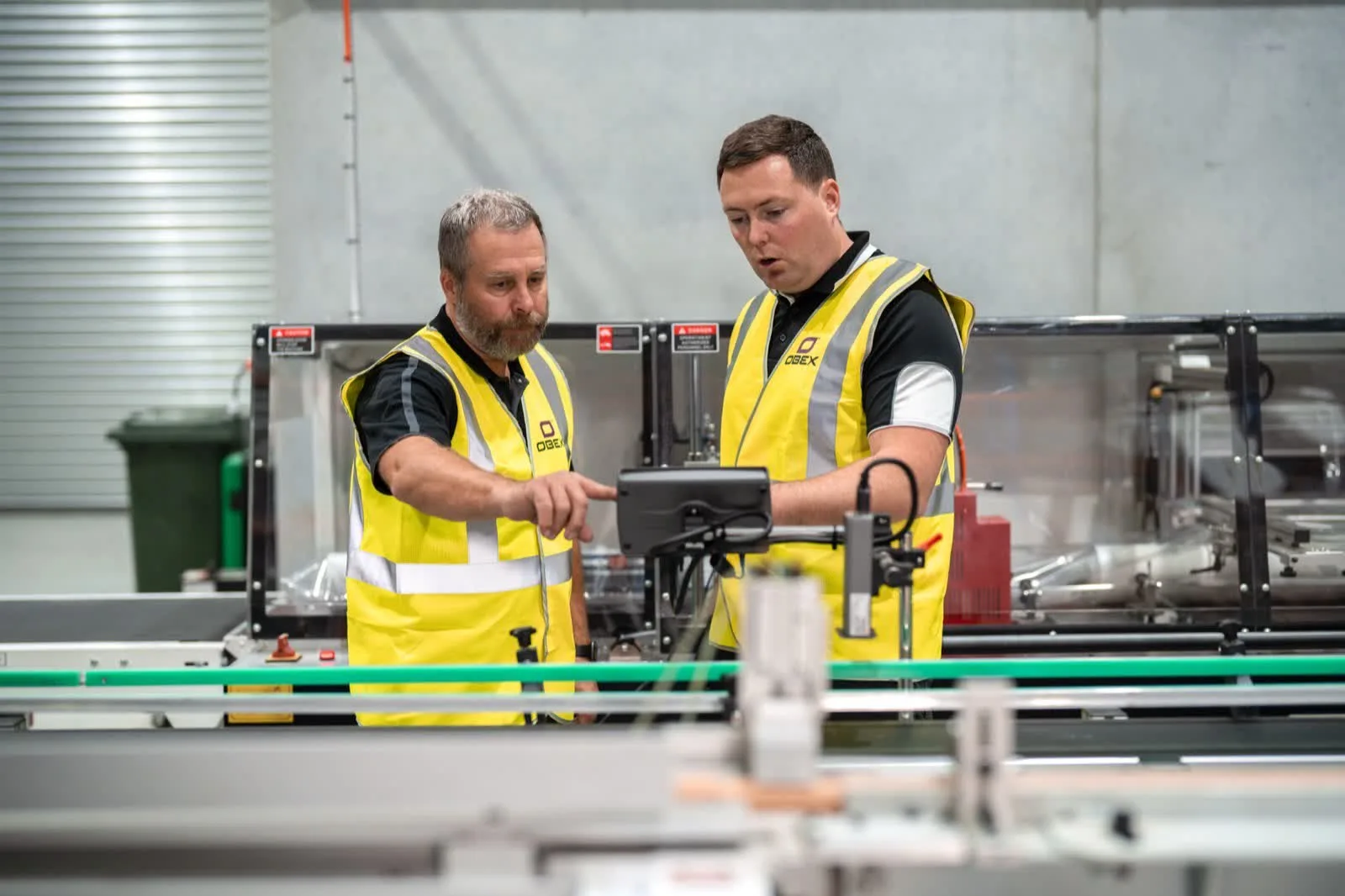
When a film crew comes into your factory in Australia, the day is mostly planning you can see coming. The crew does your site induction, wears your PPE and follows your WHS rules like any other contractor. They film around the line rather than stopping it, and you agree up front what stays off camera. Most of the work happens before anyone arrives: who signs the crew in, what insurance you need to see, which areas are restricted, and who on your team runs the day.
That's the short answer. The rest of this piece walks through the day from your side of the gate: what to sort out before, what happens on the floor, and what you check after, so filming in a factory doesn't turn into a lost shift.
If you're looking at the bigger picture, our manufacturing video production page covers how we plan, film and run campaigns for Australian makers. This article is about the shoot itself, because that's the part most manufacturers worry about.
Why manufacturers put off filming the floor
Ask most production managers about a video shoot and you'll hear the same worries. The line can't stop. Safety can't slip. And there's a process in the corner that nobody outside the business is meant to see.
All three are fair. A factory is a controlled environment for good reasons, and a crew that treats it like a studio is a risk to your people, your output and your IP.
The fix isn't to avoid filming. It's to treat the crew the way you'd treat any contractor on site: inducted, insured, supervised and briefed. Do that and filming in a factory becomes a normal working day with a few extra people in hi vis.
Before the crew arrives: five things to lock in
Almost every problem on a factory shoot can be traced back to something nobody decided the week before. These are the five that matter.
1. A site contact who can make decisions
Pick one person from your team to own the day. Usually it's a production supervisor or operations manager. They know the line, know the rules and can say yes or no on the spot. Without them, every question goes up the chain and the crew stands still while the light changes.
2. Your induction and PPE requirements
Send the crew your site induction in advance if you can. Many manufacturers run it online, which saves time on the morning. Tell them exactly what PPE is required in each zone: steel capped boots, hi vis, safety glasses, hearing protection, gloves, hair nets or anything specific to your process. A good crew brings their own boots and hi vis and asks before they arrive.
Under the Work Health and Safety Act, the business running the site has duties to everyone on it, contractors included. That means the crew follows your safety system, not the other way round. SafeWork NSW and the other state regulators treat a film crew the same as a maintenance contractor.
3. Insurance and paperwork
Ask for a certificate of currency for public liability insurance before the shoot. If drones or specialist gear are involved, ask about that cover too. If your contractor management system needs anything else, such as a safe work method statement for working near moving plant, request it early. Paperwork that turns up on the morning holds up the gate.
4. A shot list matched to the production schedule
The line is the hero of most manufacturing films, so the shoot has to follow the line, not the other way around. Share your production schedule with the crew. If a key product only runs on Thursday afternoon, that's when you film it. If changeovers, cleaning or maintenance happen at set times, the crew can use those windows for interviews or detail shots of idle machinery.
5. An agreed list of what stays off camera
This is the conversation most people skip, and it's the one that makes everyone relax. Walk the floor with your site contact and mark anything that can't be filmed: proprietary tooling, recipes or formulations on screens, customer names on pallets and labels, whiteboards with production figures, and anyone who hasn't agreed to appear. If you need it, put a non disclosure agreement in place before the crew sees the floor.
On the day: what actually happens
Here's how a typical day of filming in a factory runs, from the gate to the last shot.
Sign in and induction
The crew signs in like any visitor. They complete or confirm the induction, get their PPE checked and are shown emergency exits, muster points and restricted areas. Budget time for this in the morning. It's not wasted time. It's the reason the rest of the day runs smoothly.
A walk of the floor
Before any gear comes out, the director and camera operator walk the floor with your site contact. They look at the light, the noise, the walkways and the exclusion zones around forklifts and moving plant. This is where the shot list meets reality. A shot that looked easy on paper might mean standing in a forklift lane, so it gets moved.
Filming around a running line
A good crew doesn't ask you to stop production. They work from the walkways, use longer lenses to get close without getting in the way, and wait for the operator rather than asking the operator to wait. Where a shot needs a camera closer to the machine, your site contact decides whether it's safe, and that call is final.
Expect the crew to stay small. Fewer people, less gear and fewer cables on the floor make it easier to move around a busy factory and easier to keep everyone out of harm's way.
Light, noise and reflections
Factories throw up a few technical problems that a studio never does. Some industrial lighting flickers on camera, so the crew sets the camera to suit the lights. Stainless steel and glass guards throw reflections. And most production floors are loud, which matters for interviews.
The usual answer for noise is to record interviews in a quieter spot, such as an office, a meeting room or a corner of the warehouse, then cover them with footage of the line. Your team doesn't have to shout over a machine, and the audio stays clean.
Your people on camera
Your operators and engineers are almost always the most convincing part of a manufacturing film. They know the product, and buyers can tell. But not everyone wants to be on camera, and that's fine. Ask first, get consent from anyone who'll be clearly identifiable, and keep the ones who'd rather not appear in the background or out of shot.
For anyone talking to camera, a short chat beforehand about what they'll be asked helps more than any script. People are better explaining their own job in their own words.
What it looked like for Obex
Obex is an Australian manufacturer with a real production line and, like a lot of local makers, very little on show online. We filmed on the floor with the line running and kept every step in house, from planning to the final cut.
Shoot to delivery took two weeks. Obex came out of it with one hero video, three social videos and a full image library, all built around the thing buyers most need to see: the line itself, running, with the people who run it.
After the shoot: review, approve, publish
Nothing should go public without your sign off. Expect to see a first cut of each video and a selection of stills before anything is finished. This is your chance to catch anything that slipped through, such as a label on a pallet, a screen in the background or a person who shouldn't be identifiable.
Check for three things when you review:
- Safety: is everyone in the right PPE in every shot? Is anyone standing somewhere they shouldn't be? A buyer or regulator will notice.
- IP: is anything visible that you agreed would stay off camera?
- Accuracy: are the technical details right? Your buyers are often engineers, and they'll spot a wrong term straight away.
Once you're happy, the footage and images are ready to run on your website, in sales decks, on LinkedIn and in campaigns aimed at the people who shortlist suppliers.
Common mistakes to avoid
- No site contact on the day. The crew can't make safety calls for you, and shouldn't.
- Leaving the off camera list until the morning. It slows everything down and something always gets missed.
- Cleaning the factory until it looks like nobody works there. Tidy is good. Sterile is not. Buyers want to see a working plant.
- Filming on a day the line isn't running. A stopped line tells a buyer nothing about your capability.
- Scripting your operators. They'll sound stiff. Let them explain the job in their own words.
FAQ
Do we need to stop production for a film crew?
No. A well planned shoot works around a running line. The crew films from safe positions, follows your exclusion zones and fits close up shots into changeovers or quieter periods. Your site contact decides what's safe.
What insurance should a film crew have to work in our factory?
Ask for a certificate of currency for public liability insurance before the shoot. If your contractor system needs more, such as a safe work method statement, request it early so it doesn't hold up the gate on the day.
Does the crew have to do our site induction?
Yes. Under WHS laws the crew is treated like any other contractor on your site. They should complete your induction, wear the PPE your rules require and follow your site contact's directions.
How do we protect confidential processes during filming?
Agree a list of what stays off camera before the shoot, walk the floor with the crew to point it out, and use a non disclosure agreement if you need one. Then review every cut before anything is published.
Do our staff have to appear on camera?
Only if they want to. Ask first and get consent from anyone who'll be clearly identifiable. People who'd rather not appear can be kept out of shot or in the background.
How long does a factory shoot take?
It depends on the size of the site and how much you need. Plan for the induction and floor walk in the morning, then filming around your production schedule. Your crew should give you a run sheet for the day before they arrive.
The short version
Treat the crew like any contractor. Induct them, check their insurance, give them a decision maker and agree what stays off camera. Then let them film the line running and your people doing the job, and review everything before it goes out.
If you want help planning the next one, see how we approach video production for Australian manufacturers, or read the Obex case study. Book a strategy call to see what this could look like for your brand.